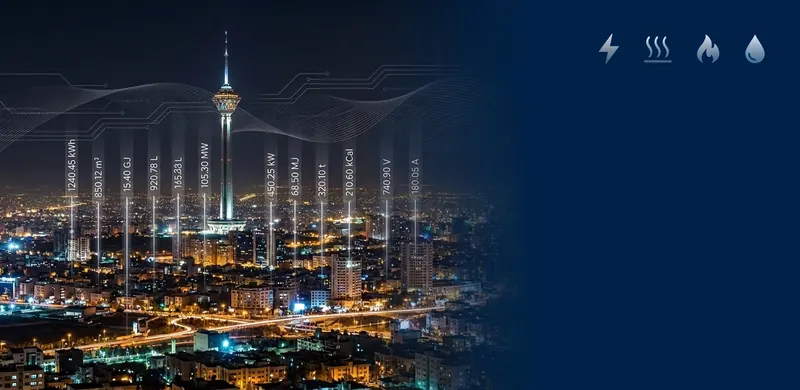
Single & Three-Phase Miniature Electricity Submetering & Monitoring
In commercial complexes, administrative buildings, villa communities, and industrial factories with demand, Bruntab Energy installs miniature single-phase and three-phase smart meters connected to data loggers and advanced monitoring software, enabling real-time registration and monitoring of power quality parameters and issuing separate rial-based electricity bills based on incremental tariff rates for each meter.
One electricity supply, dozens of users, and no defensible way to divide the bill
When a commercial complex, office building, villa community, or factory receives electricity through a central demand connection, the main meter cannot show what each unit or feeder actually used.
Recurring billing disputes
Tenants question estimates because their individual electricity use is not visible.
Efficient users subsidize waste
A low-consumption unit can pay the same share as a much heavier user.
Manual readings consume time
Staff must visit panels, record numbers, and maintain error-prone spreadsheets.
No feeder-level visibility
Managers cannot quickly identify which unit, line, or machine caused a demand spike.
Progressive tariffs are difficult
Peak, mid-peak, off-peak, and stepped tariff calculations become complicated by hand.
Power-quality issues stay hidden
Voltage, current, frequency, and power-factor problems may remain unnoticed.
CHP output is hard to allocate
On-site generated electricity still needs accurate measurement at every user.
Energy-saving decisions lack data
Without a baseline, corrective action and ISO 50001 reporting become guesswork.
The utility meter measures the property—not each user inside it
An electricity submeter is installed downstream of the main utility meter. It records the actual consumption of a unit, tenant, production line, or electrical feeder without requiring a separate utility connection for each one.
Central demand and shared supply
Large projects often use one or two central demand connections because they are more practical and cost-effective than separate utility meters for every user.
- The main bill contains only the property’s total consumption.
- Floor area, occupancy, or a fixed percentage does not equal actual electricity use.
Complex consumption and power quality
Factories and commercial properties also need to understand when and where electricity is used—not only the monthly kWh total.
- Current, voltage, frequency, power, and power factor reveal operating conditions.
- Hourly history exposes peaks, idle loads, abnormal lines, and avoidable waste.
Bruntab’s approach is simple: measure every relevant circuit. Compact single-phase and three-phase meters are installed at unit entrances or feeder panels, then connected to a reader and the EEMS platform for monitoring, reporting, and individual monetary billing.
From each meter’s reading to a transparent electricity sub-bill
Bruntab installs miniature single-phase and three-phase DIN-rail electricity submeters with pulse and Modbus data outputs. Their compact format allows installation in small floor panels and at unit entrances.
A central reader collects meter data through RS485/Modbus and sends it over LAN or cellular internet to Bruntab EEMS. Managers can monitor consumption and electrical parameters in real time, review historical reports, and issue individual bills using the selected tariff logic.
Electricity monitoring in real commercial and office properties
Bruntab has delivered electricity submetering and monitoring for major offices, shopping centers, research facilities, residential communities, and industrial sites.
 Office
Tehran
Office
Tehran
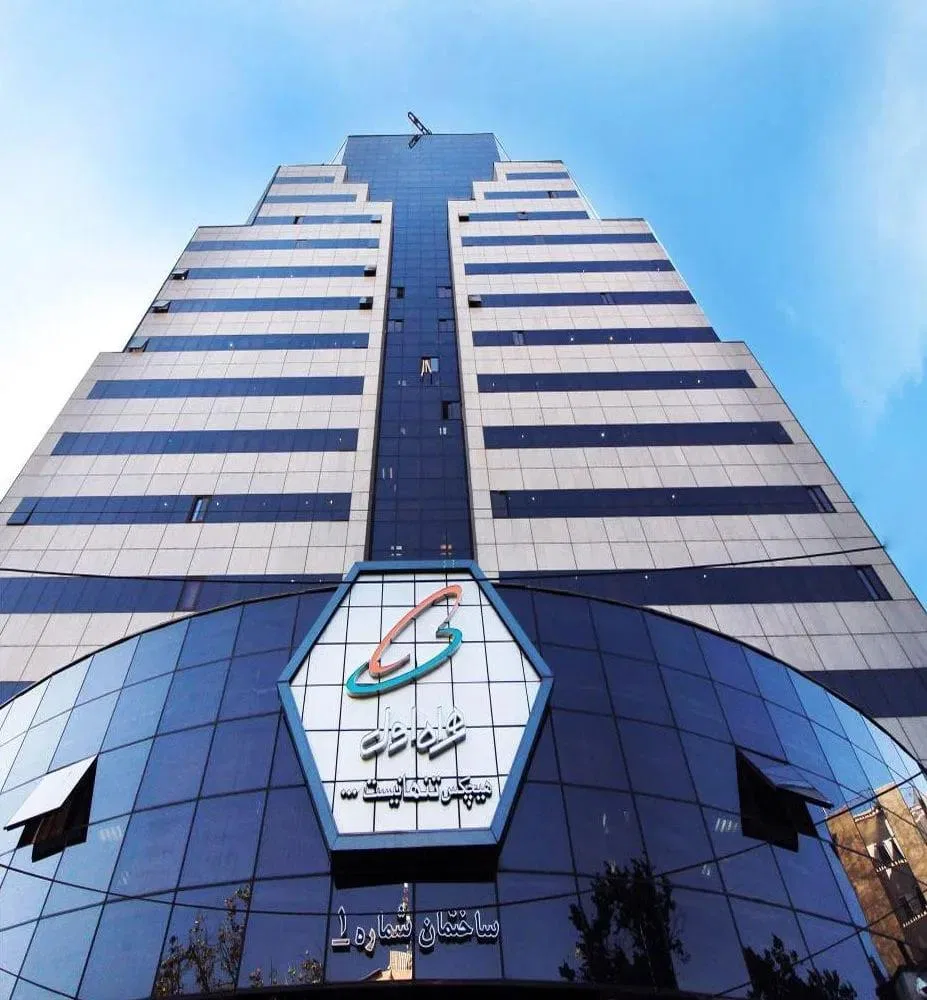
Mobile Communications Company of Iran
Electrical feeder monitoring for clearer operational energy management.
View on Projects page →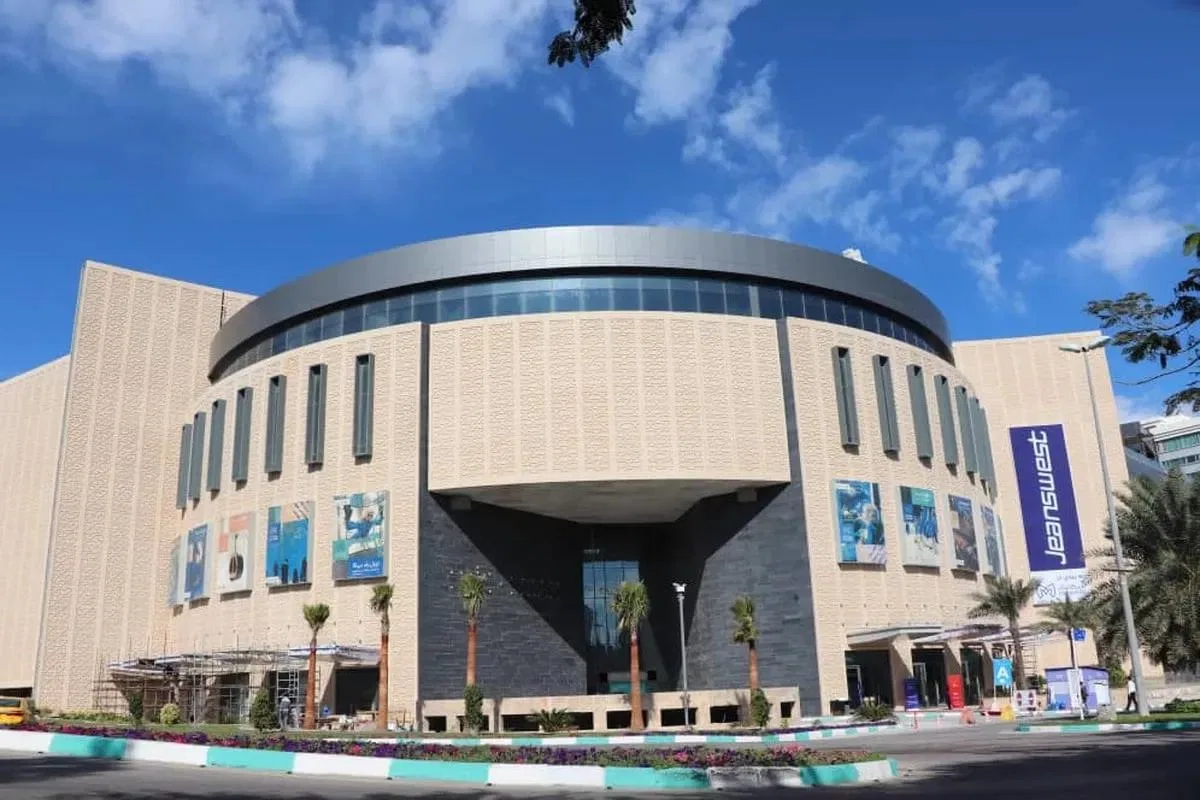 Commercial
Kish Island
Commercial
Kish Island
Mica Mall Kish
Smart metering for a large mixed commercial and administrative complex.
View on Projects page →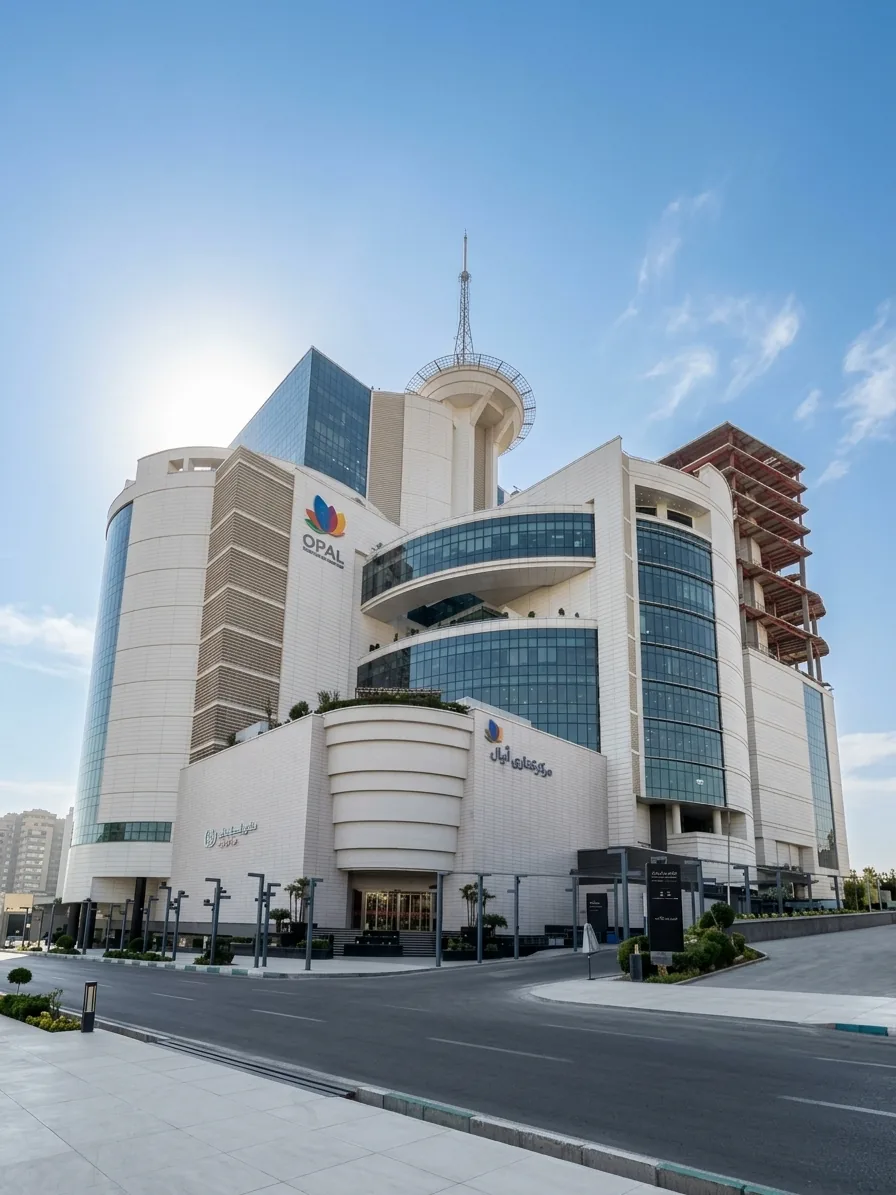 Commercial
Saadat Abad, Tehran
Commercial
Saadat Abad, Tehran
Opal Complex
Connected utility monitoring across commercial units and shared facilities.
View on Projects page →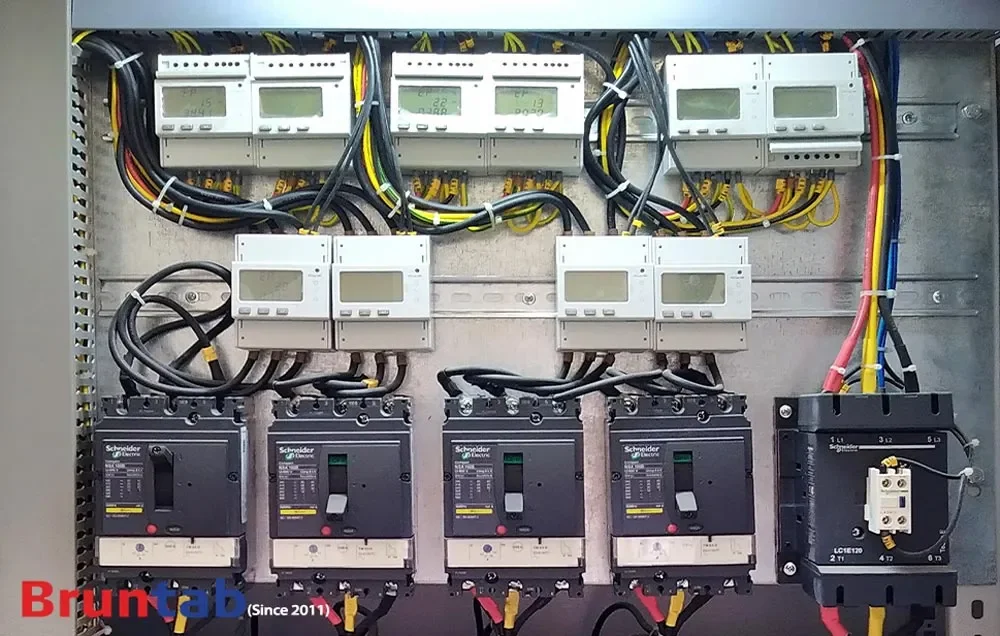 Government
Tehran
Government
Tehran
West Tehran Customs
Monitoring electricity use across warehouses, offices, utilities, and cold-storage feeders.
View on Projects page →A complete path from the electrical panel to the bill
The meter, reader, communication link, dashboard, and billing engine are engineered as one operating system.
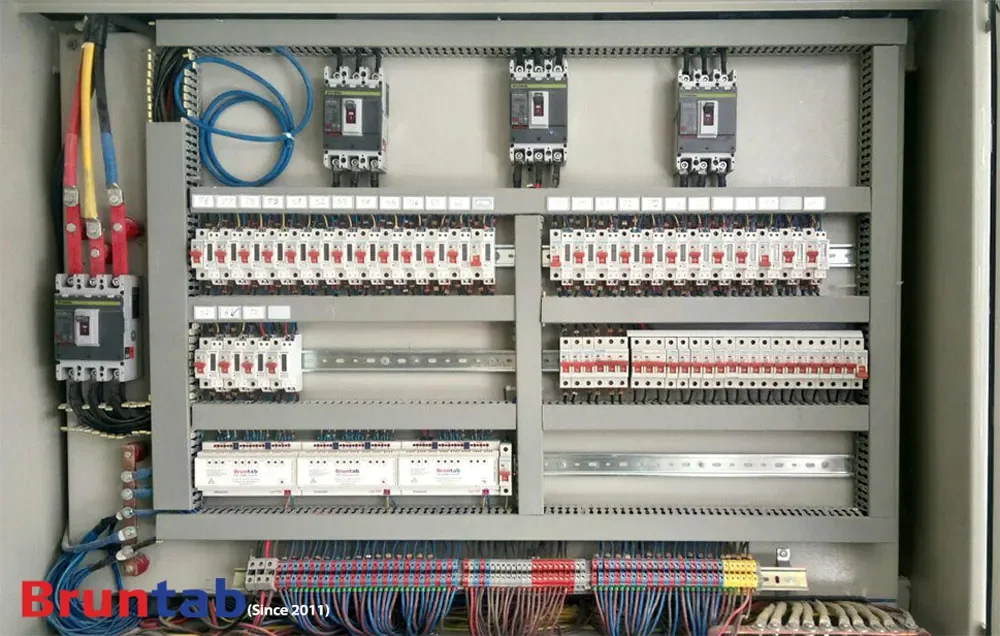
Miniature DIN-rail meter for compact electrical panels
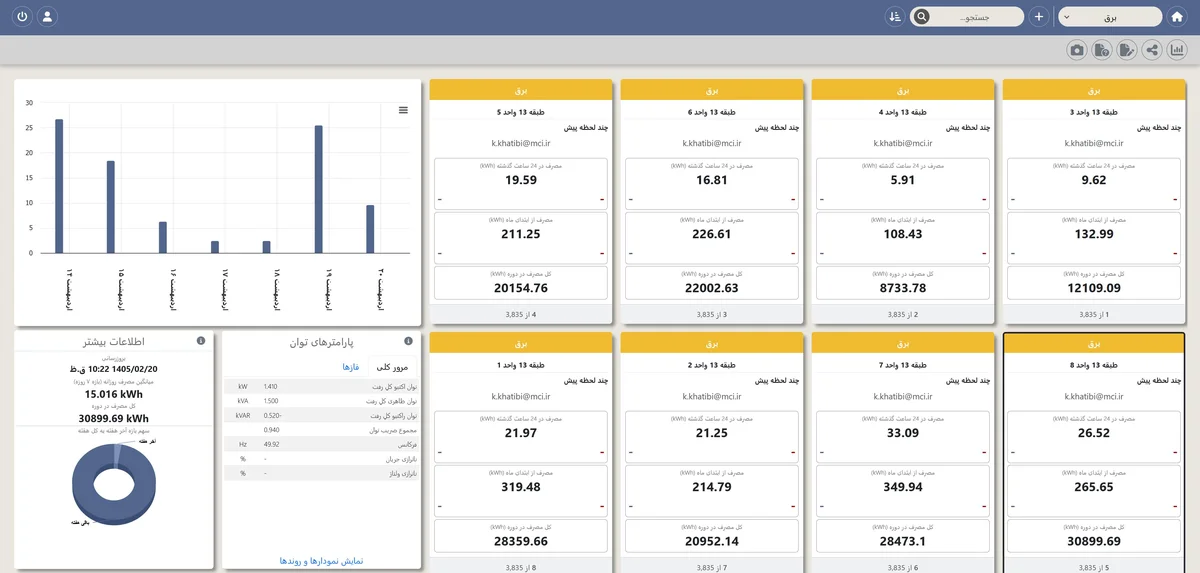
Online electricity dashboard, reports, and historical consumption
Four steps from the feeder panel to the monthly invoice
Readings move automatically from the meter to the software, eliminating visual meter reading and repeated data entry.
Survey and meter selection
Bruntab engineers review phase type, current range, panel space, CT requirements, and communication routes.
Install at each circuit
Direct or CT-connected meters are mounted on the DIN rail at each unit entrance or monitored feeder.
Read and transmit data
The reader collects pulse or Modbus data and sends it to EEMS through LAN or a cellular modem.
Monitor and bill
Managers review live and historical data while software generates a separate monetary bill for every meter.
Smaller hardware, clearer data, fairer electricity costs
The same system supports tenant billing, facility monitoring, energy optimization, and power-quality analysis.
Fair individual billing
Every user pays according to consumption recorded by its own meter.
Compact DIN-rail installation
The single-phase meter occupies about the space of one miniature circuit breaker.
Single- and three-phase coverage
Direct and CT-connected options cover units, major feeders, and higher-current loads.
Live online monitoring
Authorized users can view consumption and electrical parameters from phone or computer.
Historical reporting
Hourly, daily, monthly, and annual data supports comparison and verification.
Tariff-based invoicing
Software can apply fixed or stepped project tariffs to generate monetary sub-bills.
Power-quality visibility
Voltage, current, power, frequency, and power factor can be monitored.
Faster fault detection
Unusual loads and abnormal circuits become easier to identify.
Less manual work
Automated reading replaces visual inspection and spreadsheet re-entry.
Supports ISO 50001
Circuit-level baselines make energy-performance review and corrective action practical.
CHP allocation
Electricity generated on site can be measured and assigned to individual users.
Scalable architecture
New meters and feeders can be added as the property or factory expands.
Choose the meter by phase, current, and connection method
Final specifications are confirmed during the technical survey. Bruntab’s compact meters support remote reading and integration with the project’s monitoring architecture.
Miniature single-phase meter
DIN-rail format with LCD display and RS485/Modbus-RTU communication. It measures kWh, voltage, current, instantaneous power, total power, power factor, and frequency.
Single-phase current range
Typical direct-connected models support up to 60 A, with 80 A and 120 A versions available depending on project requirements.
Direct three-phase meter
Suitable where the load current remains within the meter’s direct range. It provides phase-by-phase electrical parameters and active/reactive energy data.
CT-connected three-phase meter
For higher-current feeders, the meter is paired with appropriately rated current transformers, such as 150/5 A or 200/5 A after engineering review.
Communication and data transfer
Pulse and RS485/Modbus outputs connect meters to Bruntab readers. Data can reach the server through LAN or a cellular connection.
Software and billing logic
EEMS retains historical readings, displays power-quality parameters, and calculates each meter’s sub-bill using the approved tariff configuration.
Submetering is dependable only when hardware, software, and support work together
Bruntab engineers the complete chain—from meter selection and panel installation to remote reading, reporting, billing, and after-sales support.
14+ years of experience
Long-term experience in utility allocation, IoT monitoring, and building energy management.
Project-specific engineering
Phase type, current, CT ratio, panel space, and communication topology are surveyed before supply.
Compact reliable hardware
DIN-rail meters and readers are designed for continuous operation in electrical panels.
Integrated EEMS platform
One platform provides live monitoring, historical reports, and downloadable individual bills.
Commercial and industrial scale
The architecture serves apartment units, shops, offices, factory feeders, and CHP projects.
Dedicated technical support
Bruntab assists with commissioning, training, maintenance, and operational questions.
What should you know before choosing electricity submetering?
Key questions about tariffs, communication, installation, offline access, measurement, and high-current feeders.
Can the system separate peak, mid-peak, and off-peak consumption?
The meter and software configuration is selected according to the project’s tariff and reporting requirements. Bruntab can calculate a fixed project tariff or configured time/tier-based billing where the selected meter data supports it.
Can one reader collect both single-phase and three-phase meter data?
Yes. Compatible single-phase and three-phase meters can share the same RS485/Modbus reading network when addresses, wiring, and network capacity are engineered correctly.
Which electrical parameters can be monitored?
Depending on the selected meter, EEMS can display energy consumption, voltage, current, instantaneous power, frequency, and power factor, together with hourly and historical charts.
Can miniature submeters be installed in an existing electrical panel?
Usually yes, provided the panel has safe DIN-rail space, accessible conductors, and a suitable communication route. A technical survey confirms phase type, current, CT needs, protection, and installation conditions.
Does Bruntab issue a separate monetary electricity bill for every unit?
Yes. EEMS calculates consumption over the selected billing period, applies the approved tariff configuration, and generates an individual monetary sub-bill for each meter.
Is electricity data available without permanent internet access?
The appropriate online or local architecture depends on the project. The reader can retain and transfer readings according to the selected configuration, while the engineering survey determines LAN, cellular, or local-access requirements.
Can a 160 A three-phase feeder be measured?
Yes. Higher-current feeders are measured with a CT-connected three-phase meter and correctly sized current transformers—for example 150/5 A or 200/5 A after checking the actual load and design margin.
Make the next electricity bill explainable down to every unit and feeder
Ask Bruntab’s engineering team to review your meter count, phase type, current range, panel layout, communication route, and billing requirements.
Request a technical consultation