EV charger installation and management for buildings
One connected Bruntab solution for safe charging, user identification, load management and automatic allocation of every vehicle’s electricity cost.
Electric vehicle charging solutions
As electric vehicles become more common, charging infrastructure is an essential part of building projects. Bruntab Energy provides consultation, electrical network design, capacity assessment, protection selection, charging-station layout and the supply of portable, wall-mounted AC and fast DC chargers to suit each project.
Request infrastructure consultation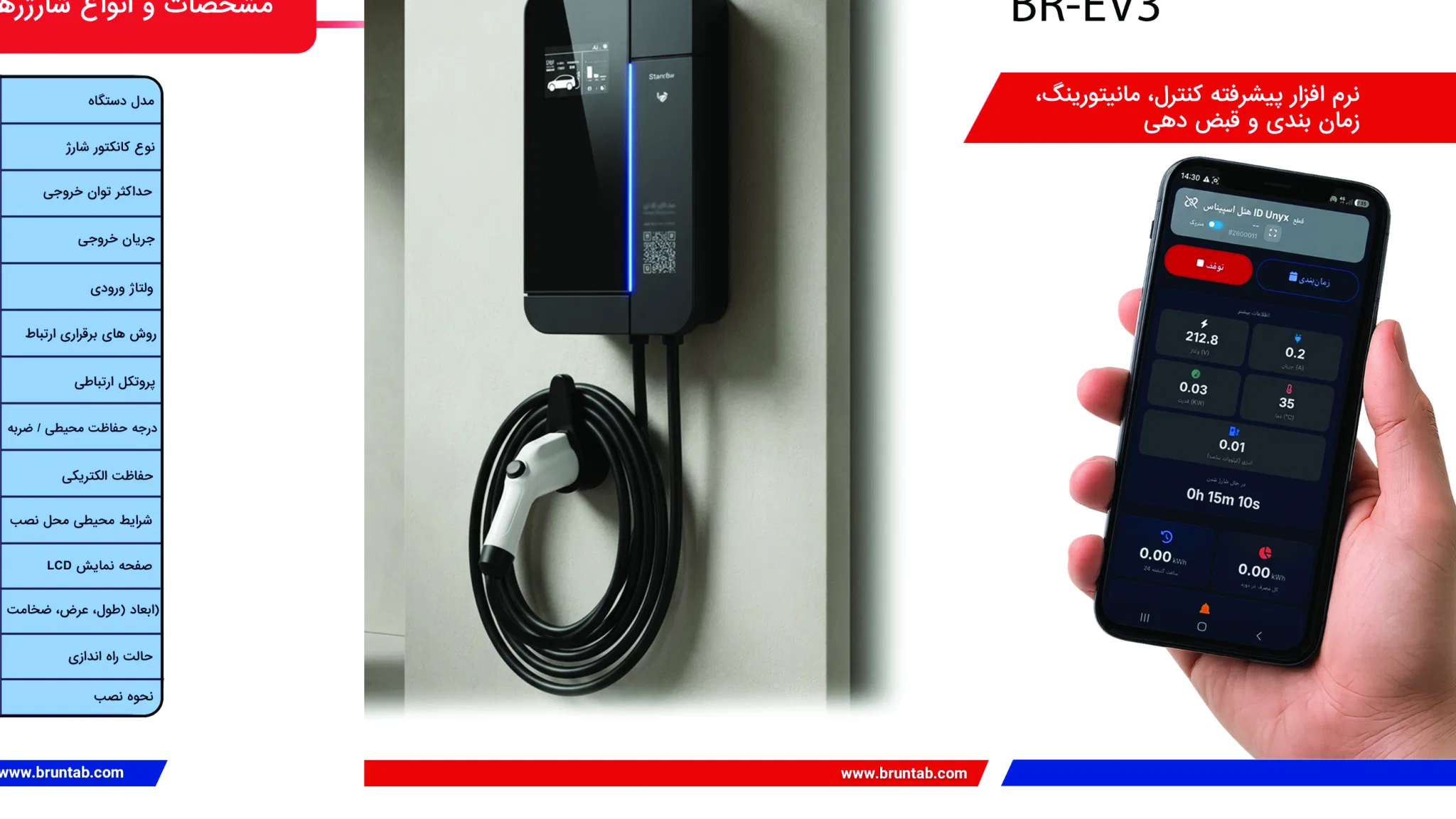
Bruntab services for EV charging systems
Technical consultation and design
Select the system, cable, socket and installation space to suit the building’s electrical supply and parking layout.
Charger supply
Supply of wall-mounted AC and DC chargers matched to infrastructure capacity and operator requirements.
Payments for owners and guests
Software services for managing energy payments and issuing bills in Iranian rials to vehicle owners or guests.
Individual feeder metering
Measure each socket feeder, send readings to the software and calculate bills using energy in kWh, time of use and the electricity tariff.
Plan charging infrastructure during building design
Charging infrastructure is part of modern building design and fit-out. The fifth edition of Part 19 requires infrastructure for at least one charging station in every building and sets the following minimum shares of parking spaces equipped with charging stations.
Residential buildings
In residential buildings with more than 10 parking spaces, at least 10% of the parking spaces on each floor must have an EV charging station.
Office and commercial buildings
In non-residential buildings with more than 20 parking spaces, at least 20% of the parking spaces on each floor must have an EV charging station.
Source: Part 19, fifth edition, section 19–5–3–1, clauses K, G and L, printed page 61. Read the regulations
Bruntab combines AC and DC chargers, dedicated meters, intelligent load management and billing software to implement charging infrastructure suited to each project.
Power supply, energy measurement and charging management
The implementation depends on unit count, electrical capacity, charger type and operating needs—from a dedicated feeder to an integrated charging network.
-
Dedicated unit meter
Supply from the unit’s own electricity meter
A separate cable runs from the unit’s electricity meter to its parking space. This approach can be used in buildings with a small number of units.
It becomes difficult in large complexes and towers, particularly those using busduct distribution. The unit’s maximum available current must also cover the vehicle and household equipment operating simultaneously.
-
Shared supply with submetering
A dedicated feeder for each parking space
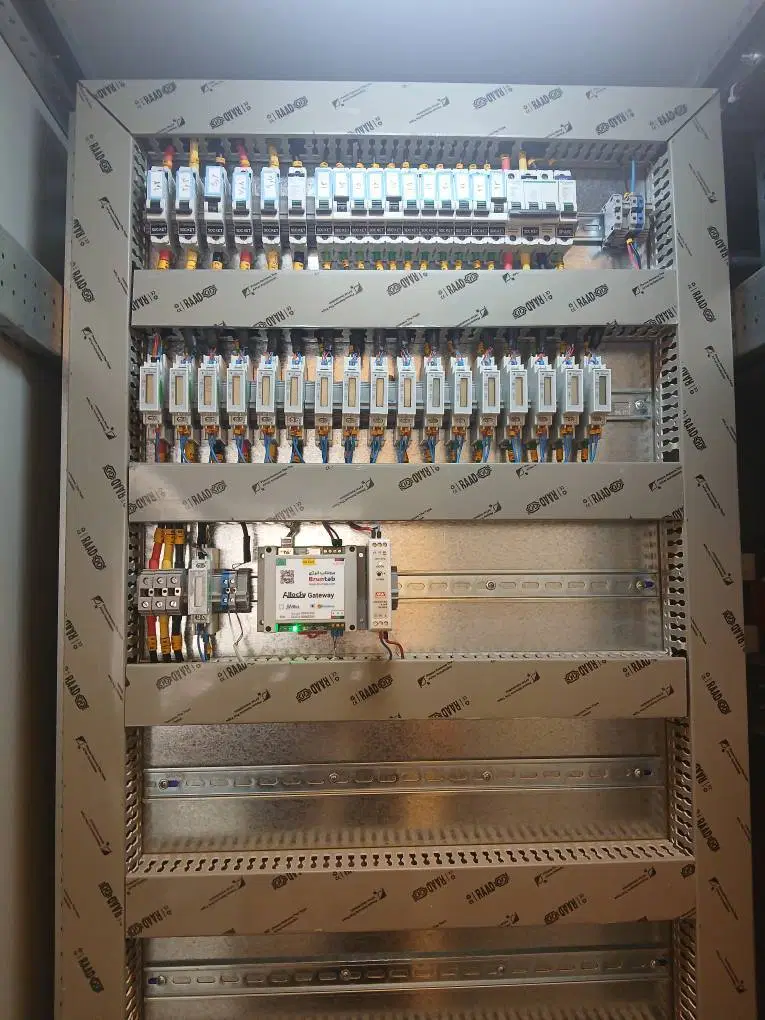
A cable runs from the floor distribution board to each parking space or owner, with a miniature electricity submeter installed. Each owner’s consumption is measured independently and a bill in Iranian rials is issued for that feeder.
This also separates consumption at portable-charger sockets; an installed metering panel is shown below.
-
Wall-mounted AC charging
Connected charging at 7.4 or 22 kW
Wall-mounted AC chargers draw from the shared supply and connect to Bruntab’s integrated platform over Wi-Fi. This approach suits longer parking periods, such as at home or work.
- Charging schedules and tariff settings
- Increase or reduce charging power
- Remote switching on and off
- Wall or pedestal mounting; single or three phase
-
Fast DC charging
Shorter charging times for shorter stops
Fast DC chargers deliver energy directly to the vehicle battery and suit intercity stations, public locations and fleets needing rapid charging.
This approach requires higher input current, more electrical capacity and a larger initial investment. The effect of frequent fast charging on battery health should also be assessed against the vehicle specifications and manufacturer’s recommendations.
-
A combined, integrated solution
Manage all charging equipment in one platform
Depending on the building’s needs, power sockets with miniature single-phase meters, wall-mounted AC chargers and fast DC chargers can be combined. Compatible equipment connects to Bruntab’s platform for centralized monitoring and cost calculation for different users.
Bruntab’s software intelligently manages charging power, prevents increased peak demand and balances available power between connected vehicles. A dedicated electricity meter can also be installed for each parking space where needed.
RFID access
After connecting a compatible cable, the driver uses an assigned RFID card to identify themselves and link the charging session to their account.
Session history and events
Building managers can remotely view charger status, session history, energy consumption and operational faults.
Phased expansion
Distribution panels, communications and the management layer can be designed to accommodate additional charging bays as EV adoption grows.
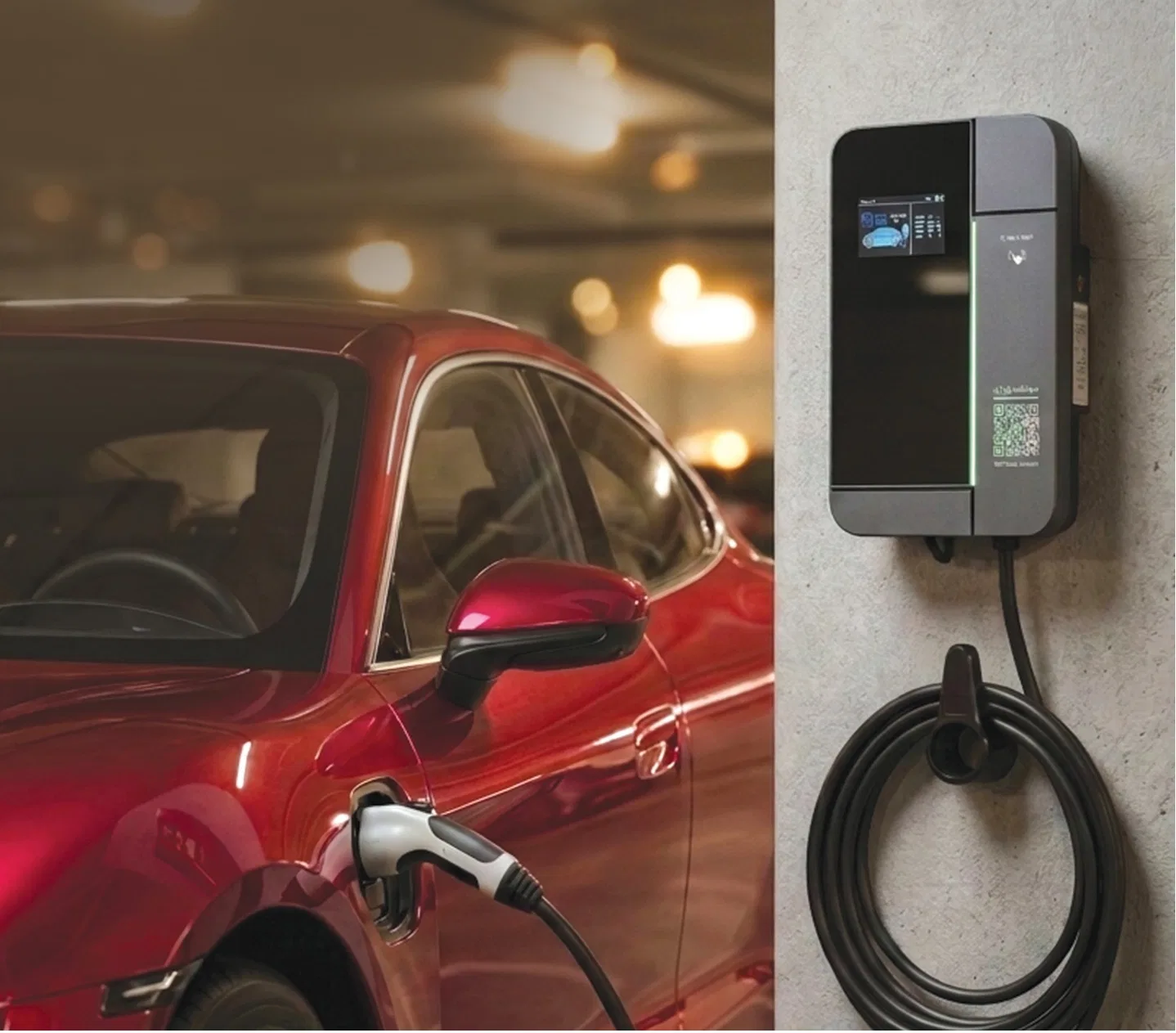
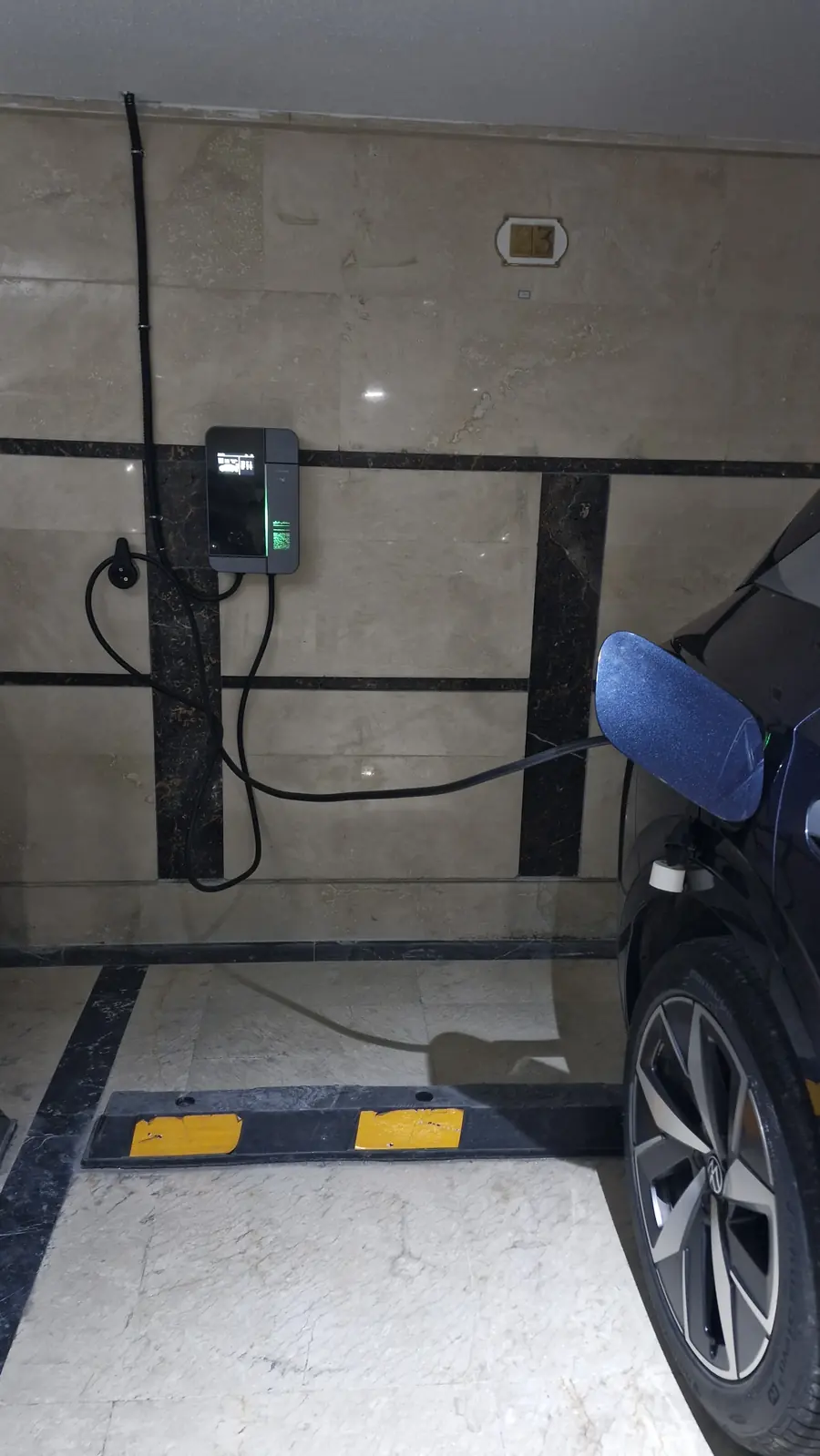
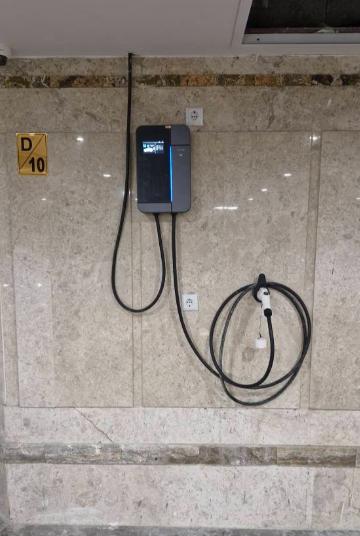
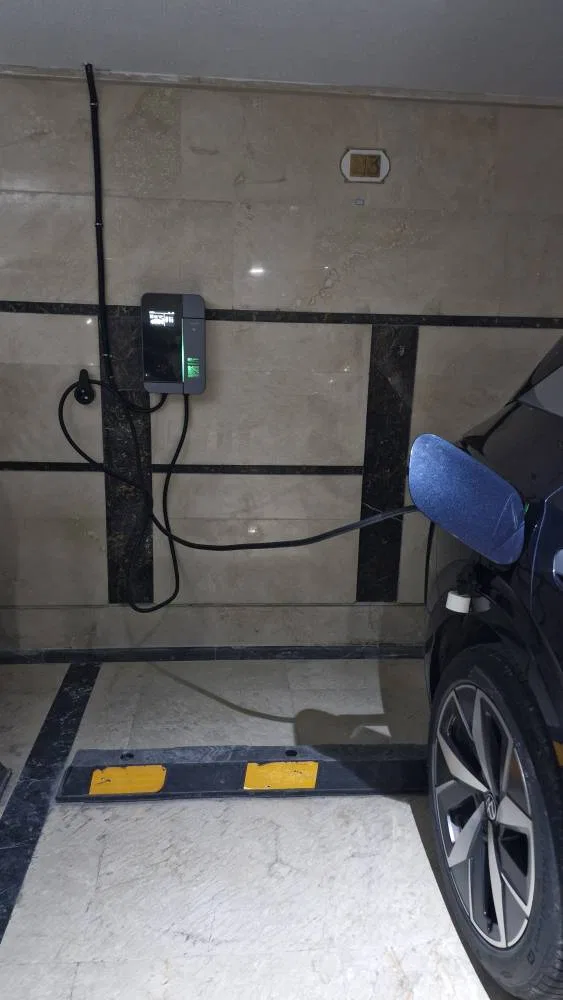
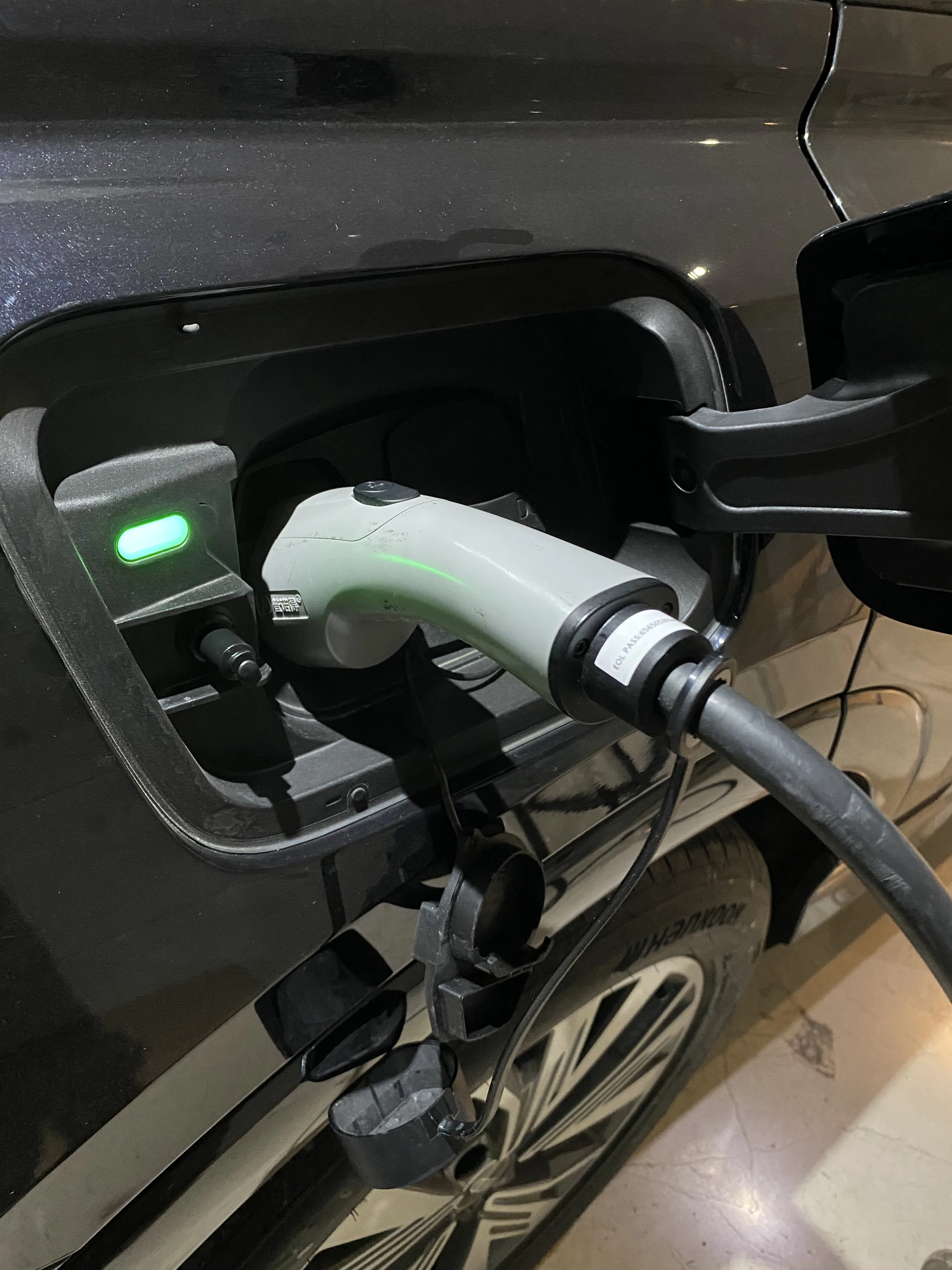
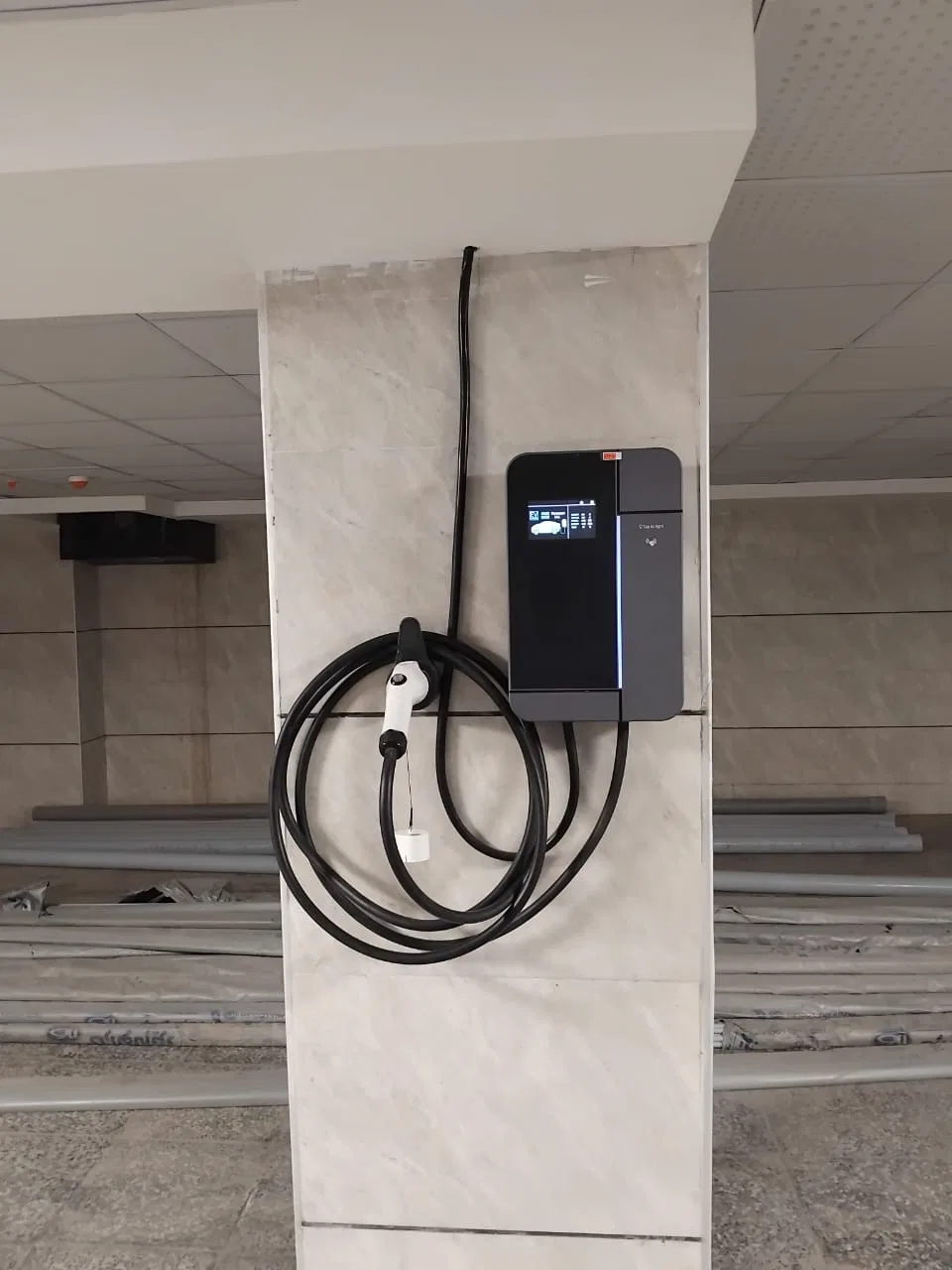
Chargers installed in parking facilities
Examples of Bruntab charging installations in residential and commercial projects.
Which charging approach suits your parking facility?
Share your parking-space count, electrical supply details and expected vehicles so we can design charging infrastructure suited to your project.